Miraijin's water birth
The HummingbirdMiraijin’s water birth is a turning point in Marco Carrera’s experience of fatherhood. On October 20, 2010, he joins his daughter Adele in the tub during labor and delivery, moving from uncertainty about whether he should be present to a profound sense of usefulness and family belonging. The birth’s brief interval in the water becomes, for Marco, a rare experience of happiness and a hopeful beginning for the child Adele calls the woman of the future.
Decision to Be Present
As the birth approached, Marco had to decide whether to take the place beside Adele that belonged not to the pregnant woman’s father, but to the child’s. Adele had no doubt that she wanted him there. Marco, however, had reasons for hesitation: he remembered the helplessness he had associated with being present when Adele herself was born, and he recognized that the decisive moments in his relationships with women could leave him feeling that others had discussed and judged him in his absence. He spoke with his psychoanalyst about those possible reservations before answering yes. His agreement did not mean that uncertainty vanished; he tried not to show how much doubt his answer had crossed.
Adele’s conviction gave the decision its emotional direction. She regarded the day as auspicious, despite its not being the birthday of many famous historical figures: Marco found only Arthur Rimbaud and Andrea della Robbia when he checked. For Adele, the date’s importance came from her confidence that the child would arrive then. At eleven in the morning on October 20, 2010, that expectation was fulfilled.
The Birth in the Water
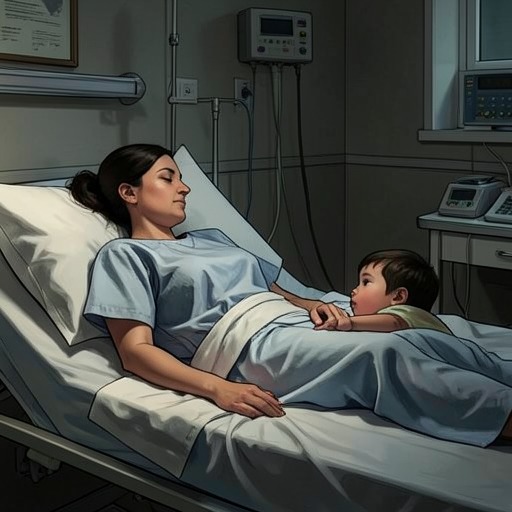
Marco was in the lukewarm tub with Adele and the midwife, Norma. The labor proceeded much faster than he had expected, especially in comparison with the prolonged labor he remembered from Marina’s delivery of Adele twenty-one years earlier. Adele’s few faint moans and her fluid changes of position also struck him as different from the painful birth he had associated with that earlier experience.
This time Marco did not feel embarrassed to hold Adele beneath the arms, and, more surprisingly to him, he did not feel helpless. He felt part of what was happening and useful to his daughter. That response made him shiver at the thought that he might have declined to attend. Adele had long insisted that the experience would feel natural; for Marco, its meaning was confirmed through being physically present rather than through argument or explanation.
After the birth, the midwife kept the newborn in the water for several seconds before lifting her out. Marco felt neither anxious nor impatient during that interval. The water gave him a way to understand the moment as shared: he was immersed alongside Adele and the new child, rather than standing apart from an event he could not affect. He experienced relief in his own aging body as he recognized the firmness of Adele’s and the newborn’s bodies beside him. The water, in his perception, was what held the three of them together.
Recognition and Family Meaning
Marco later regarded the half-minute they shared in the water as the most enlightened interval of his life. He called the murky water their only happy family experience, a judgment that sets the scene apart from the fighting and shouting he remembered elsewhere in family life. Its happiness is brief, but it is not merely an idea imposed on the birth afterward: Marco discovers it while participating in the event, as the water, the three bodies, and his new sense of usefulness make a family moment possible.
When the baby was lifted from the water and given to Adele, Marco began to measure his life against what he had just experienced. He was surprised by the well-being he had felt in a place where he remembered conflict and distress, and wondered why water birth was so rarely practiced. He stayed silent, intent on remembering Miraijin’s first calm breath, first cry, and first opening of her almond-shaped eyes. In that moment he did not even notice that the newborn was a girl; he learned it from Adele’s first words after the birth.
Adele, holding the baby against her chest, told him, “See, dad? It starts well. The Man of the Future is a woman.” Her declaration turns Miraijin’s birth into more than a private family arrival: it gives the child a future-facing identity and expresses Adele’s belief that a woman can embody the coming future. The scene’s significance lies equally in that promise and in Marco’s changed place within the family. He enters the tub unsure whether to take part and emerges from the moment with a memory of belonging, calm, and a beginning that, through Adele’s words, starts well.